


Can You Cook With Non-Alcoholic Wine? How to Use It, and What to Swap For What
How to cook with non-alcoholic wine, which red or white to use for each dish, how much alcohol regular wine leaves behind, and our dry picks.
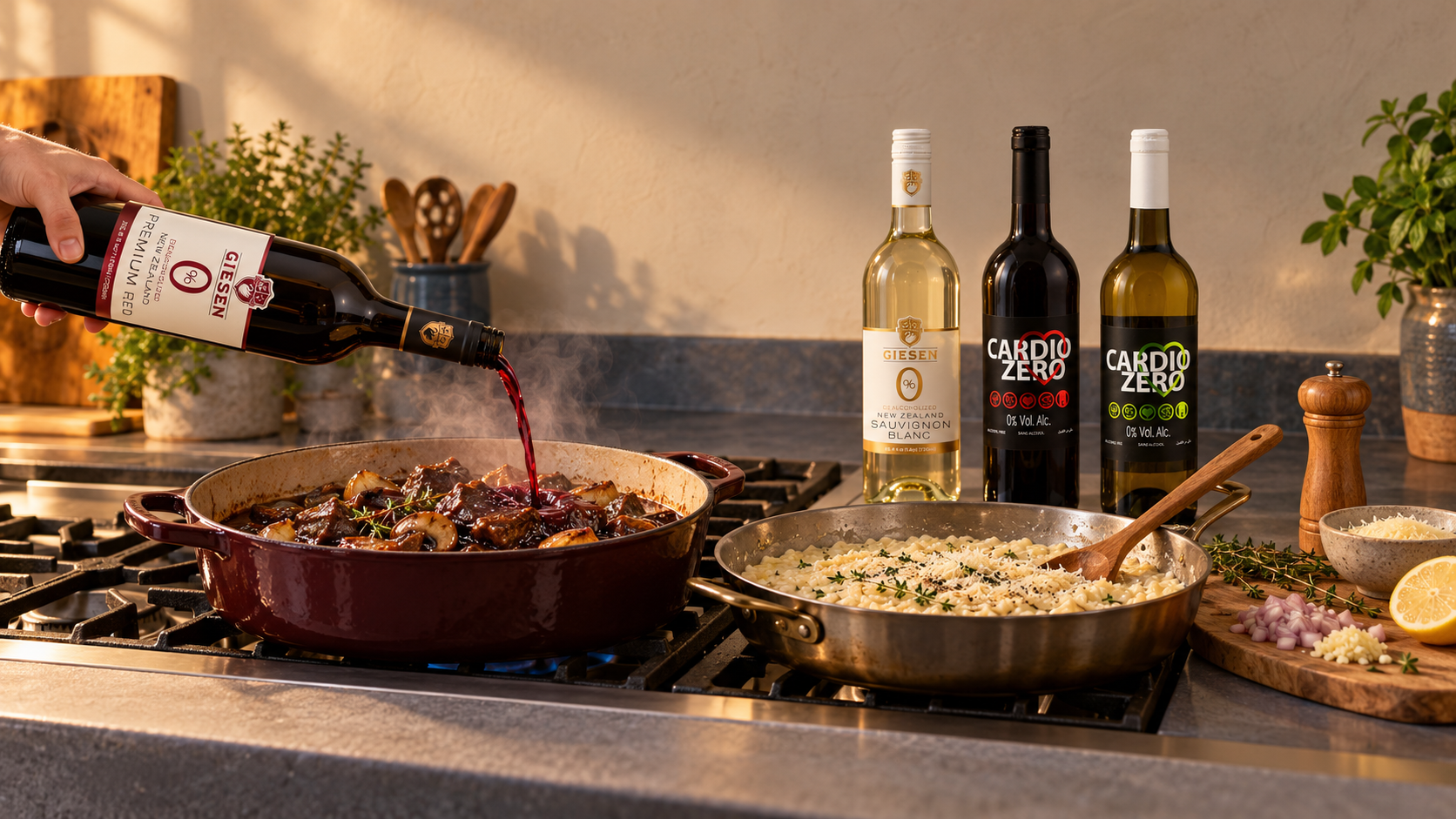
Yes, you can cook with non-alcoholic wine, and it does most of what wine does in a pan: acidity, fruit and depth for risotto, pan sauces, braises and poached fruit. It’s usually a little sweeter than wine, so choose a dry bottle and add a splash of vinegar or lemon if a dish tastes flat. And it solves a problem regular wine has: cooking doesn’t burn off as much alcohol as most people think.
The short version
Choose dry
Pick a non-alcoholic wine with under 3 g of sugar per 100 ml. Sweet ones make sauces taste jammy.
Add acid
A teaspoon of red or white wine vinegar, or lemon, puts back the bite alcohol would have given.
Reduce a little longer
Non-alcoholic wine has less body, so let it cook down a minute or two more.
Season at the end
It carries no salt, unlike supermarket cooking wine, so taste and season as usual.
Does alcohol cook off? Less than you’d think
Cooking with regular wine leaves more alcohol behind than most people expect. Using figures from the USDA’s nutrient retention tables, Idaho State University notes how much remains after simmering:
A pan sauce brought to a boil and taken off the heat can keep most of its alcohol, and a flambé keeps much of it too. Non-alcoholic wine starts with almost none: under 0.5%, or none detectable at 0.0%. If you’re cooking for children, someone who doesn’t drink, or a pregnancy, a 0.0% bottle takes the question off the table. Our pregnancy guide explains the labels.
What about “cooking wine”?
Bottles sold as cooking wine in supermarkets are usually wine with salt and preservatives added, and they still contain alcohol. Check the label. A drinkable non-alcoholic wine tastes better, has no added salt, and you can pour a glass of what’s left.
What to use for what
| Dish | Use | Tip |
|---|---|---|
| Risotto, pan sauces, mussels | Dry non-alcoholic white | Add a squeeze of lemon at the end |
| Braises, ragù, beef stew | Dry non-alcoholic red | A teaspoon of red wine vinegar after it reduces |
| Chicken Marsala | Dry non-alcoholic red | Plus a teaspoon of balsamic and a pinch of sugar |
| Recipes calling for dry sherry | Dry non-alcoholic white | Plus a splash of sherry vinegar |
| Poached pears, mulled sauces | Any non-alcoholic red | Sweeter is fine here; add spice and citrus peel |
Swap cup for cup with the wine the recipe asks for.
Our picks for the kitchen
Dry, affordable and easy to find on our shelves. Sugar is per 100 ml, from each label.
Dry white
Giesen 0% Sauvignon Blanc: 1.6 g sugar, crisp and citrusy, about $21. Labeled under 0.5%.
Dry red
Giesen 0% Red Blend: 2.7 g sugar, about $21, for braises and sauces. Labeled under 0.5%.
White, 0.0%
Elivo Cardio Zero White: labeled 0.0%, about $25, for when you want no alcohol at all.
Red, 0.0%
Elivo Cardio Zero Red: labeled 0.0%, about $25, a Spanish red that holds up to long cooking.

- <0.5%
- 1.6 g sugar per 100 mL

- <0.5%
- 2.7 g sugar per 100 mL


Keep reading: pairing food with non-alcoholic red wine.
Common questions
Can you cook with non-alcoholic wine?
Yes. It adds acidity, fruit and depth like wine, swapped cup for cup. It's often a little sweeter and lighter, so choose a dry bottle, add a splash of vinegar or lemon if the dish tastes flat, and reduce it a minute or two longer.
Does alcohol cook off when you cook with wine?
Not completely. USDA figures show about 40% remains after 15 minutes of simmering, 25% after an hour and 5% after two and a half hours. Non-alcoholic wine starts with almost none, so there's little or nothing to cook off.
Is non-alcoholic wine the same as cooking wine?
No. Supermarket cooking wine is usually wine with salt and preservatives added, and it still contains alcohol. Non-alcoholic wine is a drinkable wine with the alcohol removed or never formed, and no added salt.
What can I use instead of Marsala or sherry?
For Marsala, use a dry non-alcoholic red with a teaspoon of balsamic and a pinch of sugar. For dry sherry, use a dry non-alcoholic white with a splash of sherry vinegar. Taste and adjust as the sauce reduces.


