


Best Non-Alcoholic Champagne and Sparkling Wine
Sparkling wines without the alcohol, each picked for a different kind of drinker, with sugar levels side by side so you can find your style.

Sparkling wine without the alcohol has come a long way. The best bottles are made as real wine first, so they keep the structure, acidity and bead that make a toast feel like one. Below are our picks, each answering a different question, with the fact that decided it and the bottle that came closest.
Sparkling is where alcohol-free wine is strongest. In Wine Spectator’s 2026 blind tasting of 50 alcohol-free wines, the sparkling bottles fared better than the reds, because bright acidity and bubbles carry a wine once its alcohol is gone. None of them is Champagne, and they are lighter in body, but the best come close.
How we picked: in October 2026 we compared the label records of the 56 sparkling wines we had in stock, then shortlisted by sugar, method and style. The chart below shows every bottle we weighed. Our Editor’s Choice bottles are ones our team has tasted.
Find your bottle
Ten picks, each answering a different question. Whites run driest to softest, then rosé, then a sampler: the numbers aren’t a ranking.
- 01Bone-dry, and the oyster bottleFrench Bloom L'Extra Brut
- 02You miss a toasty brutPierre Zéro Signature Sparkling
- 03A 0.0% Champagne-style toastFrench Bloom Le Blanc
- 04Dinner: seafood, pastaPrima Pavé Blanc de Blancs
- 05Prosecco fans, brunchPrincess Alternativa Bollicine
- 06Organic matters to youNoughty Sparkling Chardonnay
- 07Weddings and big toastsSo Jennie Paris Blanc Dry
- 08A touch of sweetnessLussory Premium Sparkling Brut
- 09Dry sparkling roséPrima Pavé Rosé Brut
- 10Not sure yet: try threeSparkling Wine Sampler




The picks
Each pick names the fact that decided it and the bottle that came closest.

French Bloom L'Extra Brut
- 0.0%
- 0.0 g sugar per 100 mL
- Dealcoholized
- France
French Bloom’s driest bottle: organic Chardonnay from the Languedoc, dealcoholized, with four ingredients and no added sugar or spring water. Citrus and mineral, with bright acidity.
Pair with: Oysters and shellfish, or on its own as an aperitif.

Pierre Zéro Signature Sparkling
- <0.5%
- 1.9 g sugar per 100 mL
- Dealcoholized
- France
A Chardonnay from Pierre Chavin in the Languedoc, fully fermented as wine before the alcohol comes out, and it shows: toasted almond, baked apple and a nutty edge. Pour it in a white wine glass rather than a flute to give that nose room.
Pair with: Lobster thermidor, truffle risotto or crab linguine.
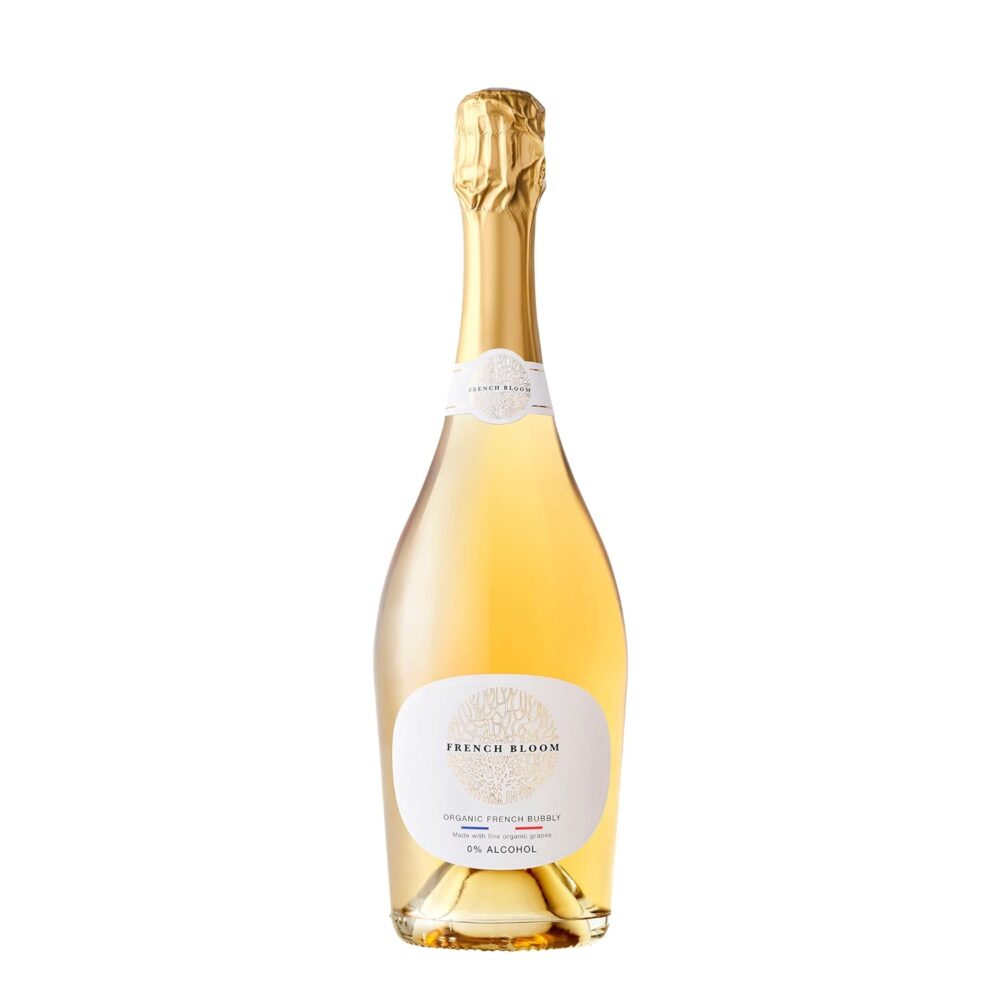
French Bloom Le Blanc
- 0.0%
- 2.4 g sugar per 100 mL
- Dealcoholized
- France
Founded by Maggie Frerejean-Taittinger and Constance Jablonski, French Bloom starts with organic Chardonnay from Limoux, dealcoholizes it and blends it with sparkling spring water. Ripe pear and lemon zest lead into a long, slightly saline finish.
Pair with: Seafood, an aperitif, or dinner itself.
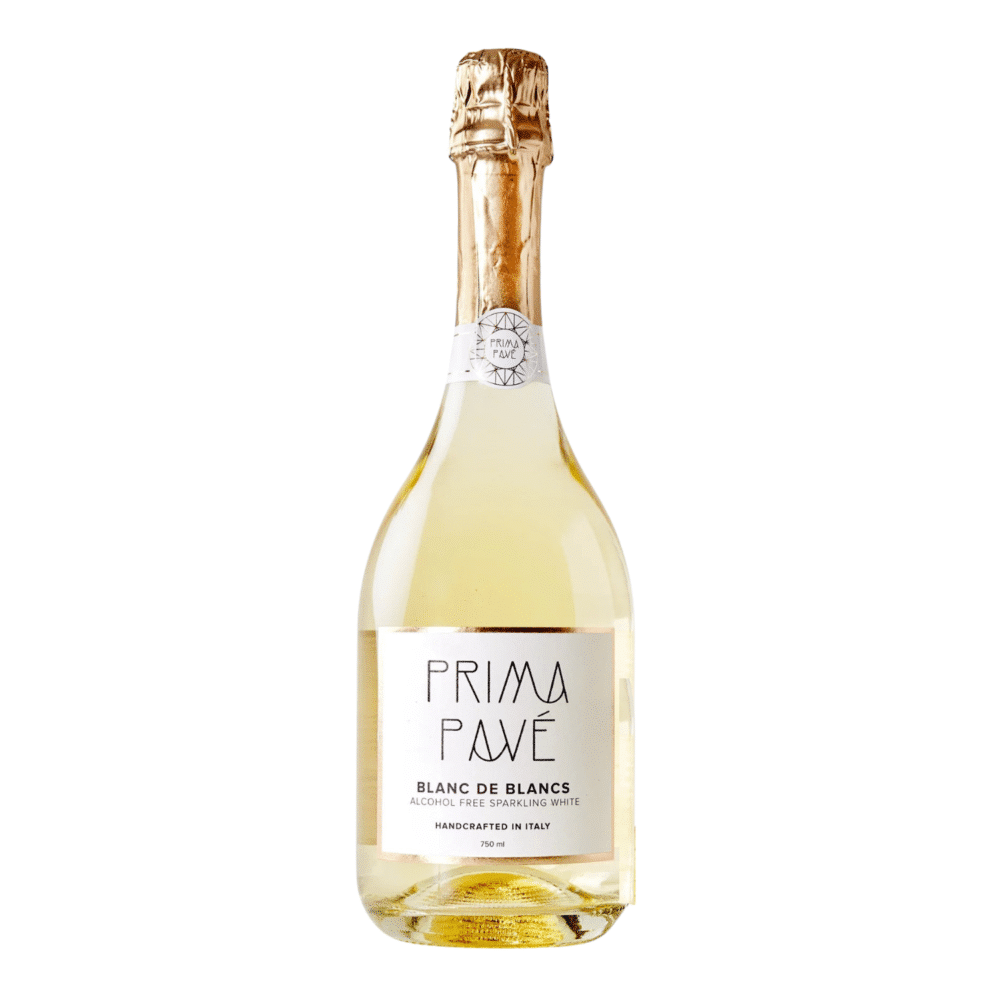
Prima Pavé Blanc de Blancs
- 0.0%
- 2.5 g sugar per 100 mL
- Dealcoholized
- Italy
A bone-dry Italian blend of Gewürztraminer, Pinot Grigio and Sauvignon Blanc from Friuli, made as wine first. White peach, green apple and elderflower, with enough juicy acidity to stand up to food.
Pair with: Sushi, shellfish, a lobster roll or a bowl of cacio e pepe.

Princess Alternativa Bollicine
- 0.0%
- 2.5 g sugar per 100 mL
- Dealcoholized
- Italy
From Trentino in northern Italy, fully fermented and then dealcoholized. Honeysuckle and fresh-cut grass, light and fruit-forward, with a clean, crisp finish: the lighter, brighter style prosecco drinkers look for.
Pair with: Brunch spreads, antipasti and olives, or a zero-proof spritz.

Noughty Sparkling Chardonnay
- 0.0%
- 2.9 g sugar per 100 mL
- Dealcoholized
- Germany
Organic Chardonnay from southern Spain, dealcoholized with aroma recovery and lightly carbonated. Green apple and citrus with a creamy note on the nose; lighter on the palate, with a clean finish. Organic, vegan and halal.
Pair with: Shellfish, Brie or goat cheese, light salads or creamy pasta.
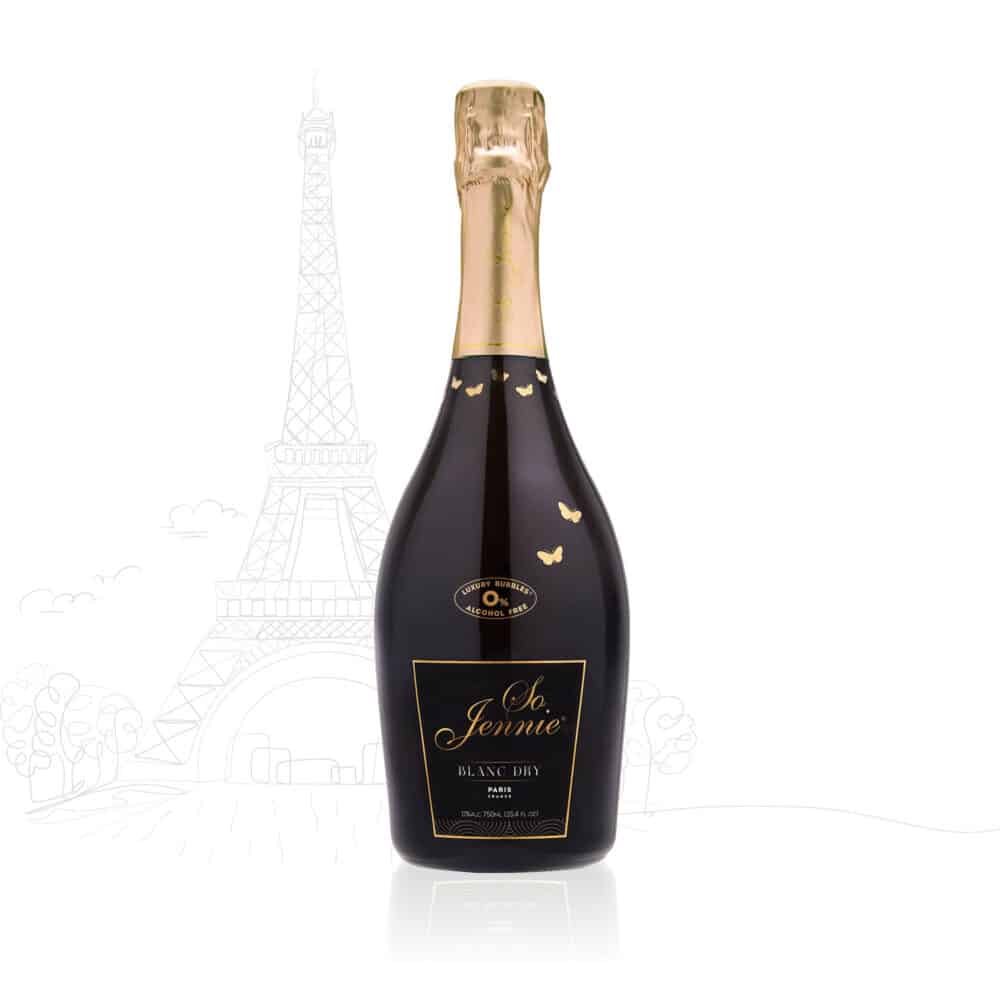
So Jennie Paris Blanc Dry
- 0.0%
- 4.5 g sugar per 100 mL
- Never Alcoholized
- France
Editor’s Choice The bottle we choose for a toast.
Made in Paris from white grape must and never alcoholized, so there’s no alcohol to remove. White peach and pear over a fine, persistent mousse, under cork and cage. It looks the part in a flute and stays dry enough to carry on through the meal.
Pair with: Oysters, sushi or goat cheese.

Lussory Premium Sparkling Brut
- 0.0%
- 5.2 g sugar per 100 mL
- Dealcoholized
- Spain
Spanish Airén from La Mancha, made in the Cava style and matured for a year before the alcohol is removed at low temperature. Candied pear, yellow peach and pineapple, lively bubbles and a soft, off-dry finish. A crowd-pleaser for guests who find brut too sharp.
Pair with: Prosciutto and melon, tempura vegetables, or a lemon meringue tart.
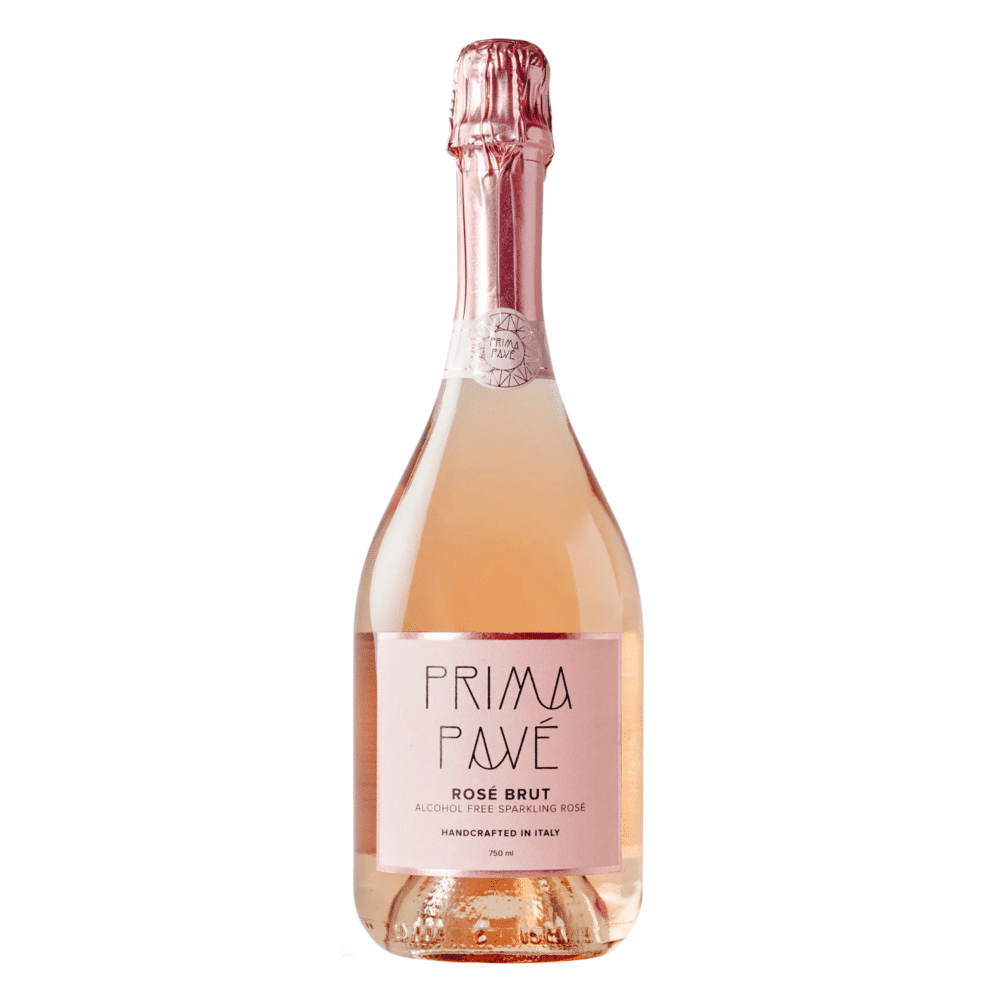
Prima Pavé Rosé Brut
- 0.0%
- 2.5 g sugar per 100 mL
- Dealcoholized
- Italy
Editor’s Choice The bottle we choose when the pour itself is part of the occasion.
Montepulciano d’Abruzzo with a little Pinot Grigio, Sauvignon Blanc and Gewürztraminer, made as wine and then dealcoholized. Violet and raspberry over peach, dry and faintly mineral.
Pair with: Mediterranean dishes, charcuterie, seafood or soft cheeses.
Sparkling Wine Sampler
- 0.0%
- France, Italy, Spain
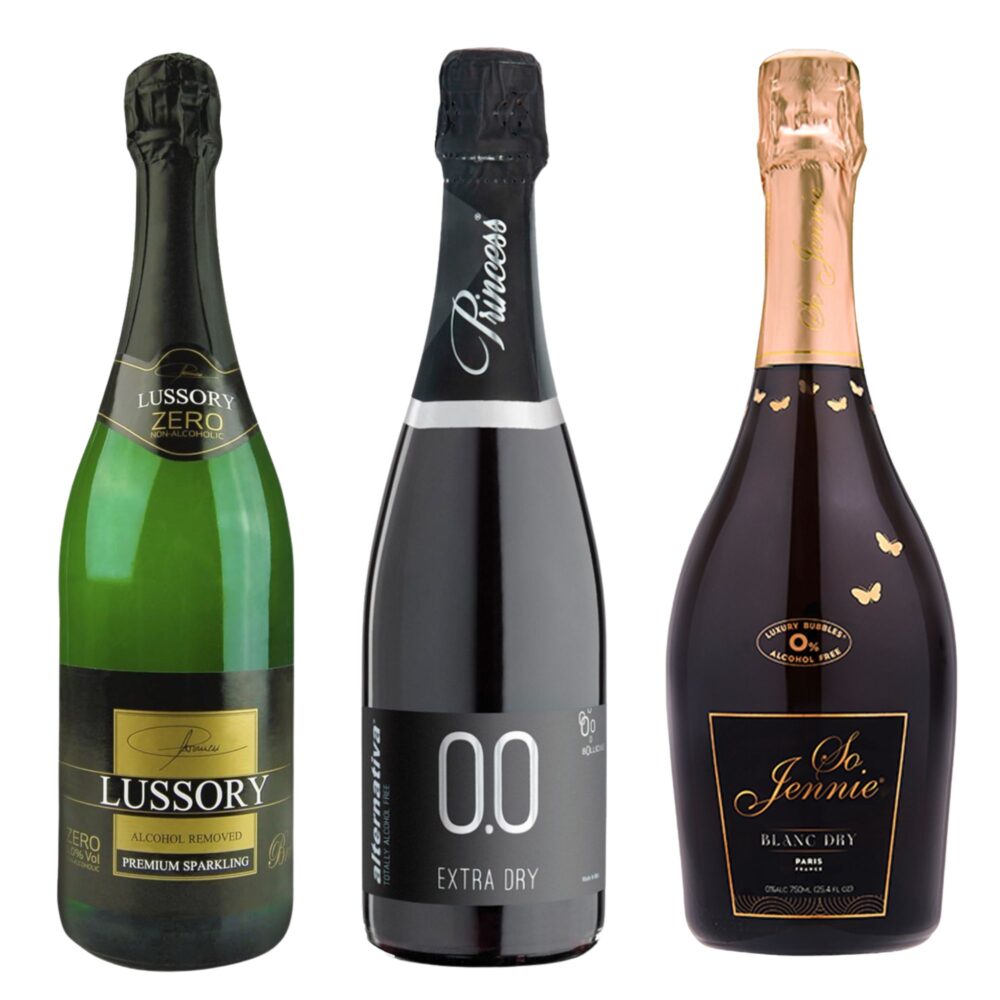
Three bottles poured side by side: Lussory Premium Sparkling Brut from Spain, Princess Alternativa Bollicine from Italy and So Jennie Paris Blanc Dry from France. Open all three and you’ll know within a glass whether you lean dry, bright or soft.

Not a wine at all: a sparkling blend of organic teas from Denmark, for a table that wants something drier and more savory than any grape.
Sugar, side by side
Every bottle we weighed for these picks, driest first. Sugar is the figure on each producer’s label, in grams per 100 mL; lower is drier.
Our picksAlso comparedg sugar per 100 mL
- French Bloom L'Extra Brut0.0 g0.0% · Dealcoholized · France
- Pierre Zéro Signature Sparkling1.9 g<0.5% · Dealcoholized · France
- French Bloom Le Blanc2.4 g0.0% · Dealcoholized · France
- Princess Alternativa Bollicine2.5 g0.0% · Dealcoholized · Italy
- Prima Pavé Blanc de Blancs2.5 g0.0% · Dealcoholized · Italy
- Prima Pavé Rosé Brut2.5 g0.0% · Dealcoholized · Italy
- Noughty Sparkling Chardonnay2.9 g0.0% · Dealcoholized · Germany
- Bolle Grand Reserve Blanc de Blancs3.0 g<0.5% · Dealcoholized · Spain
- Oddbird Blanc de Blancs4.0 g<0.5% · Dealcoholized · France
- French Bloom Le Rosé4.2 g0.0% · Dealcoholized · France
- So Jennie Paris Blanc Dry4.5 g0.0% · Never Alcoholized · France
- Señorío de la Tautila Espumoso Blanco5.0 g0.0% · Dealcoholized · Spain
- Lussory Premium Sparkling Brut5.2 g0.0% · Dealcoholized · Spain
- Pierre Chavin Perle Blanc8.3 g0.0% · Never Alcoholized · France
How to choose
Dry, fruity or soft
If you drink brut Champagne, start under 3 g of sugar per 100 mL. If you like prosecco, look for the lighter, fruit-forward Italian styles. If brut tastes sharp to you, the bottles above 4 g will feel rounder.
0.0% or under 0.5%
Most bottles here are 0.0%. A few, like Pierre Zéro Signature, are labeled under 0.5%, the level most markets allow for a drink sold as non-alcoholic. Every pick shows which, and the shop’s Alcohol Content filter sorts them.
Dealcoholized or never alcoholized
A dealcoholized wine is fermented as wine and has the alcohol removed afterward, usually by low-temperature vacuum distillation, which keeps more of a wine’s structure. A never-alcoholized bottle, like So Jennie, is built from grape must and carbonated, and tends to read cleaner and fruitier.
How the bubbles get there
Most alcohol-free sparkling wine is carbonated after the alcohol is removed; done slowly and cold, that gives a finer, longer-lasting bead. A few producers, like Bolle, ferment the wine a second time after dealcoholization, so the bubbles come from fermentation itself.
Serving and keeping
Chill
39–45°F for most; French Bloom and So Jennie colder, at 36–39°F.
Glass
A flute keeps the bubbles longer; a white wine or tulip glass shows more of the toastier bottles.
Open
Slowly, holding the cork and turning the bottle.
Keep
Reseal with a sparkling stopper and keep it cold. Most producers say to finish within two to three days.
Common questions
Is there a non-alcoholic Champagne?
Champagne is a protected name for wine from the Champagne region of France, so no alcohol-free bottle can use it, and none tastes quite like it: without alcohol the wine is lighter in body. The closest in style are dry Chardonnay sparkling wines made as wine and then dealcoholized, such as Pierre Zéro Signature Sparkling and French Bloom Le Blanc.
What is the driest non-alcoholic sparkling wine?
French Bloom L'Extra Brut, with no sugar at all. Pierre Zéro Signature Sparkling follows at 1.9 g per 100 mL, then French Bloom Le Blanc at 2.4 g, and Princess Alternativa Bollicine and both Prima Pavé bottles at 2.5 g.
Is non-alcoholic sparkling wine completely alcohol-free?
Many bottles are 0.0%. Some are labeled under 0.5%, the level most markets allow for a drink sold as non-alcoholic. Each product page states which, and the shop's Alcohol Content filter sorts them.
How long does non-alcoholic sparkling wine last once opened?
Reseal it with a sparkling stopper and keep it in the fridge. Most producers say to finish it within two to three days, while the bubbles are still lively.


