


Why People Are Going Sober, and What They Are Doing Instead of Drinking
Fewer Americans are drinking than at any point on record, and the explanations contradict each other. As for what they are doing instead — mostly the same things they always did, plus a few they could not before. It is what they are holding that changed.
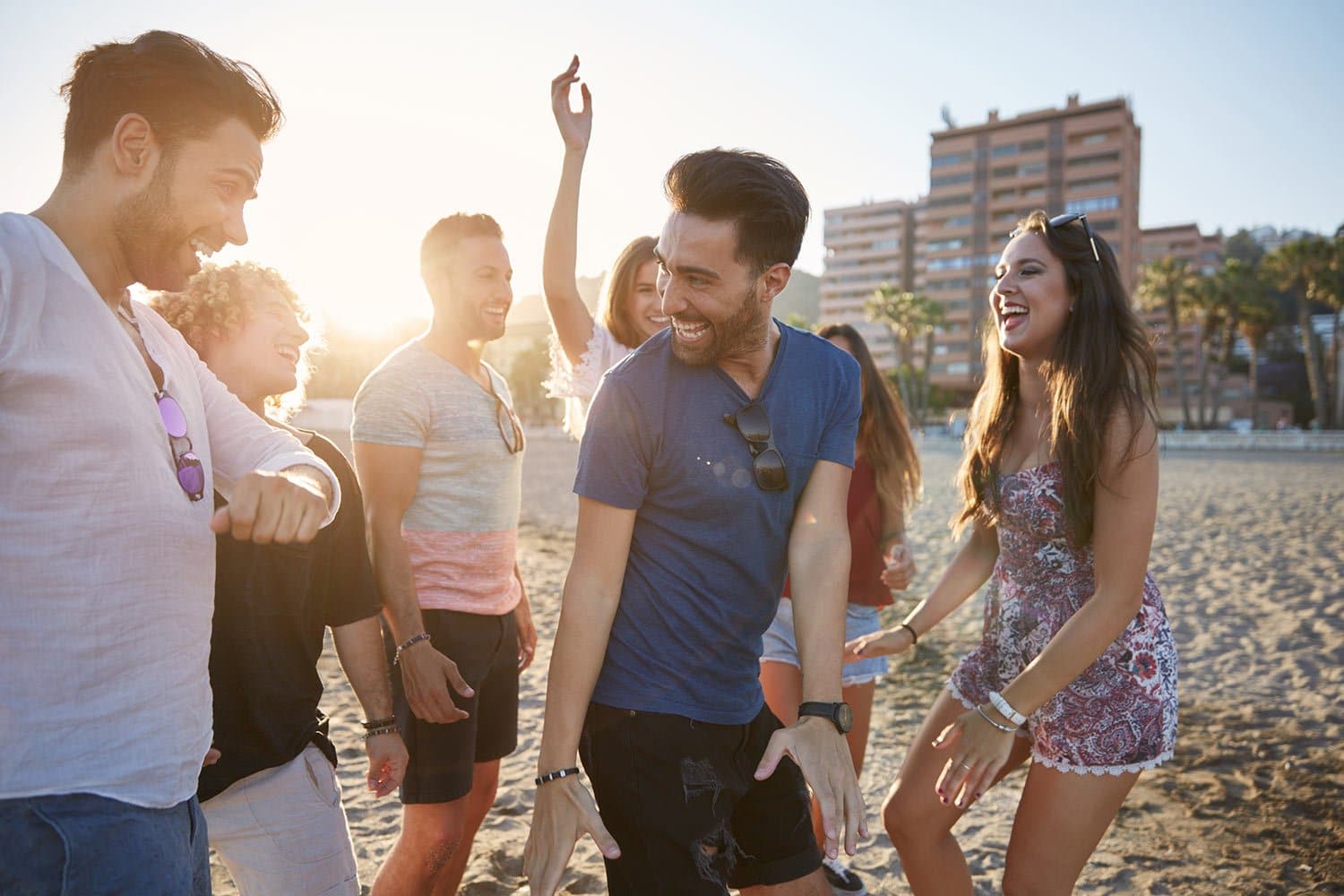
There is a small wrong assumption inside the question, and it is the useful place to start.
“What are people doing instead of drinking” expects an answer about activities — that they took up running, started cooking, see friends in the mornings now. Those answers are common and they are true. They are also slightly beside the point, because most of those things had a drink in them before and still have something in them now.
Nobody replaced the barbecue. They replaced what was in the cooler.
If anything the list of things people do got longer rather than shorter, in two specific ways. The Saturday morning after the barbecue is available in a way it was not, which is not a claim about anybody’s body — it is a claim about a Saturday. And there is now a whole layer of places to go that did not exist ten years ago: alcohol-free bars, bottle shops with tasting counters, pop-ups that take over a venue for a night, dance events that start at seven in the morning.
So the interesting question is not what people do with the hours. It is what they are holding while they do it — and that has changed beyond recognition in about a decade.
Fewer people are drinking, and the explanations disagree
The trend is not in dispute. Gallup has asked Americans whether they drink since 1939, and in 2025 54% said they did — the lowest it has recorded, down from 62% two years earlier.
The reasons are another matter entirely, and this is the part most articles smooth over. Six explanations are in circulation and several of them cannot all be true at once.
What people say themselves
YouGov’s rolling survey found in mid-2026 that 36% of American drinkers said they were drinking less than a year earlier, against 5% drinking more. The most common reason given was simply a reduced desire to drink, at 50% — ahead of health concerns at 35% and cost at 20%.
Worth sitting with that. The leading self-reported reason explains nothing. Half the people cutting back are not citing a cause; they just want it less than they did.
Cost
Datassential reported in early 2026 that more than two-thirds of drinkers think alcohol has become noticeably more expensive, and over a third named price as their main reason for cutting back. The least glamorous explanation and possibly the largest.
Who is actually drinking less — and this is where it breaks down
The received wisdom is Gen Z. Reporting through 2025 and 2026 has consistently tied the decline to younger drinkers, socializing less and taking health more seriously, and the numbers behind that are real: Gallup found the share of under-35s who drink at all fell ten points across two decades.
The industry’s own consumer data says something different. IWSR’s March 2026 research attributes the deepening decline mainly to Boomers, describing them as the only generation reducing participation, frequency and drinks per occasion at the same time. On the same data, Gen Z participation has been rising — from 66% in early 2023 to 73% two years later.
Both things can be partly true — a long generational decline and a recent uptick are not incompatible — but they support opposite stories about what is happening now, and almost nobody writing about this mentions the second one.
Intensity, not participation
The same research points at a subtler shift: overall participation has held broadly steady, while the average number of drinks per occasion fell from 4.4 in March 2024 to 3.9 two years later. Which suggests the story is less about people quitting and more about the same people having two instead of four.
Two wildcards
GLP-1 medication. One analyst has called it the iceberg on the horizon for the drinks industry; research cited by Morgan Stanley suggests these drugs can substantially reduce how much people drink. Too new to size properly, potentially larger than everything else here.
Cannabis. Pew found that as of early 2024, 79% of Americans lived in a county with a dispensary. Some of what looks like drinking less is people choosing something else, which is a substitution story rather than a moderation one.
The answer, as far as there is one
The explanations conflict because each of them is hunting for a cause, and this is not the kind of change that has one. What moved is the threshold.
It used to take a reason not to drink. You were driving, pregnant, in recovery, religious, on antibiotics — and you were expected to produce it, usually in front of people. Declining without a reason was the thing that required explaining.
That requirement has largely gone, and every contradictory finding above reads consistently once it does. Half of those cutting back cite no cause because none is needed any more. Participation holds roughly steady while drinks per occasion fall, because this is not a wave of people quitting — it is the same people having two instead of four and nobody asking them about it. Cost, health, medication and cannabis are pressures on that threshold rather than the cause of it.
The market followed rather than led. Sixty-one million people did not arrive because the drinks got better; the drinks got better because there was suddenly a reason to make them.
And “sober” stopped being a loaded word somewhere in the middle of it. It used to imply a history — say it and people assumed there was a story, and often waited for it. It is now closer to a description of an evening than of a person, which is a smaller and far more useful thing for a word to be.
Sober curious was the term coined to get around that problem, and it is already sounding slightly dated for the same reason: it was a way of saying not drinking, but do not read anything into it, and that caveat is needed less every year. The practical guide is for whichever of these you are, and it does not ask.
So what are they holding?
One word before the answer. People search for an alcohol substitute, and it is worth pausing on, because it quietly sets an expectation the best of this category does not meet. A substitute stands in for something and is judged against it. Several of the drinks below are not standing in for anything — they were designed as themselves, and the people who like them most are the ones who stopped comparing.
What follows is organized the way a week actually is, rather than by product type: the occasions people already have, and what is in the glass at each of them. The category is far easier to understand through use than through a list of categories.
The end of the working day
The most-mentioned moment and the one people most want solved. A pour at seven marked the boundary between work and not-work, and the drink was doing less of that job than the ritual around it — the particular glass, the sitting down, the twenty minutes.
What tends to occupy it now is something bitter with a bit of ceremony. An aperitif over ice, a spritz, a proper tonic build. Bitterness matters here more than anywhere: sweet drinks read as refreshment and slide past the moment, where something with an edge asks to be sipped and so takes the twenty minutes it is supposed to.
It is also the moment where the honest answer might be no drink at all — a walk at the same hour, a shower, cooking something that needs attention. Anything your body does, at a time, that cannot be done while still checking email. Most people end up with both.
Dinner, with people
The hardest one to solve and the one where the category has worked hardest. A drink at a table has to stand up to food, get discussed, and change what the next mouthful tastes like.
Alcohol-free wine is the obvious route and the deepest shelf. Taking the alcohol out removes body, aroma carriers and structure, which is why the early attempts were sweet — sugar was filling the hole. The methods now used take it out at low temperature and put aromatics back, and sparkling is the easiest style to get right, which is why there is so much of it. The wine section is the largest part of this publication for a reason.
The less obvious route is the better one for a lot of tables: sparkling teas, fermented botanicals, verjus aperitifs, bitter sodas built to be sharp enough to sit beside food. These were never imitating wine, which is exactly why they tend to convert the people who were most doubtful. Nobody sips one and thinks about what is missing.
The long afternoon
Barbecues, games, the beach, a Saturday that has no plan in it. Low intensity, several hours, and a drink that does not demand attention.
This is beer, almost always, and beer is the oldest and most developed corner of the category — the range now runs from crisp lagers through hazy IPAs to stouts and sours. Style matters far more than brand: somebody who drank IPA will notice a lager immediately. Who makes what is its own subject.
Two things vary between bottles and are worth reading: some are 0.0% and some are 0.5%, and different producers use those numbers to mean different things.
Leaving the house
A concert, a picnic, a hike, a friend’s place, a long drive. What is needed is something that travels, needs no equipment, and does not commit you to finishing a bottle.
Cans and ready-to-drink cocktails are the most practical thing in the whole category and the least discussed. One glass, nothing to open and half-abandon, and they are the cheapest way to find out what you like without buying a shelf.
They are also the right answer for arriving at somebody else’s house, because they need the host to do nothing at all.
Actually making something
The version people report enjoying most, because it is a thing you did rather than a thing you bought. Cooking has taken over a lot of the evening for people who stopped drinking, and drinks are part of the same impulse.
This is where zero-proof spirits belong, and the commonest mistake with them is treating a bottle as a drink. It is an ingredient. Alcohol-free gin drunk neat is about as pleasant as gin drunk neat; built with tonic, citrus, or vermouth, it is a different proposition entirely. What these carry is the botanical, the smoke, the pepper. What they cannot carry is the heat, which is a difference rather than a failure and is worth knowing before the first sip.
The recipes matter most here, because the balance of a drink changes when the spirit does — a negroni without gin is not a negroni minus one ingredient, it is a different build.
Three recipes to start with
A negroni, an old fashioned and a mojito, without the spirit.


The mornings, and the drinks that come with them
The activity people mention most after cooking is anything that happens early: run clubs, swims, markets, dawn dance parties, the whole culture of being out of the house before ten. It is not incidental — a morning is the part of the week alcohol was most reliably taking, and getting it back is the clearest example of the list getting longer rather than shorter.
The drinks attached to that world are the functional corner: adaptogen blends, nootropics, and kava, which is a Pacific root with centuries of traditional use and a very different history from anything else here. They are sold on how the ingredients are meant to make you feel rather than on how the drink tastes.
We are not going to tell you what any of these do. Independent evidence on most of them is limited, the marketing is not, and a shop is the wrong narrator for that question. What is knowable is what is in the bottle — the ingredient, the dose, whether caffeine has been added alongside — and that is worth learning to read.
One thing needs saying here rather than in a footnote: the FDA has issued a consumer advisory linking kava supplements to severe liver injury. If you have a liver condition or take prescription medication, ask a doctor or pharmacist before trying it.
Going out is still going out
The last thing people assume they have lost, and the one that has moved furthest in the opposite direction — there is more of it than there was, not less. Alcohol-free bars exist but are rare; bottle shops with tasting counters are far more numerous, pop-ups take over ordinary venues for a night, and the good cocktail bar in your town almost certainly has a zero-proof list nobody told you about. Where to go is its own article.
Sources
Market and survey findings. No claim is made about what any drink does.
- Gallup. U.S. Drinking Rate at New Low as Alcohol Concerns Surge, Consumption Habits survey, 2025
- YouGov Profiles. Why 36% of Americans are drinking less alcohol in 2026, July 2026
- Datassential. Non-Alcoholic Beverage Trends 2026, January 2026
- IWSR. Boomers drive TBA declines as Gen Z steps up, Bevtrac 2026 Consumer Insights, Wave 1 — the load-bearing source for the generational finding.
- IWSR. No- and Low-Alcohol Strategic Study, ten largest markets, 2022–2024
- FoodNavigator. Alcohol decline drivers: affordability, GLP-1 drugs, health, reporting Morgan Stanley research, February 2026
Common questions
What do people drink instead of alcohol?
Mostly alcohol-free versions of what they drank before — beer is the most developed, wine the deepest, zero-proof spirits the newest — plus canned cocktails, and a growing set of drinks like sparkling teas and bitter aperitifs that were never imitating anything.
What should you try first?
Start from what you used to reach for. A beer drinker should start with beer, where the range is widest. If you have no particular preference, sparkling is the easiest thing to get right and the safest thing to bring anywhere.
What is a good substitute for alcohol?
It depends what you are substituting. For a beer at a barbecue, alcohol-free beer is a close match. For a glass of wine with dinner, the closest thing is often not alcohol-free wine but one of the bitter or tannic drinks that were never imitating wine in the first place.
Do you have to replace the drink at all?
No. Some of what a drink did was mark the end of the day, and a walk or a shower at the same hour does that without anything in a glass. Most people find they want both.


