


Beyond Imitation: The Evolution of Non-Alcoholic Beverages
The category began by copying drinks people already knew. The bottles that stopped copying are the most interesting ones on the shelf.
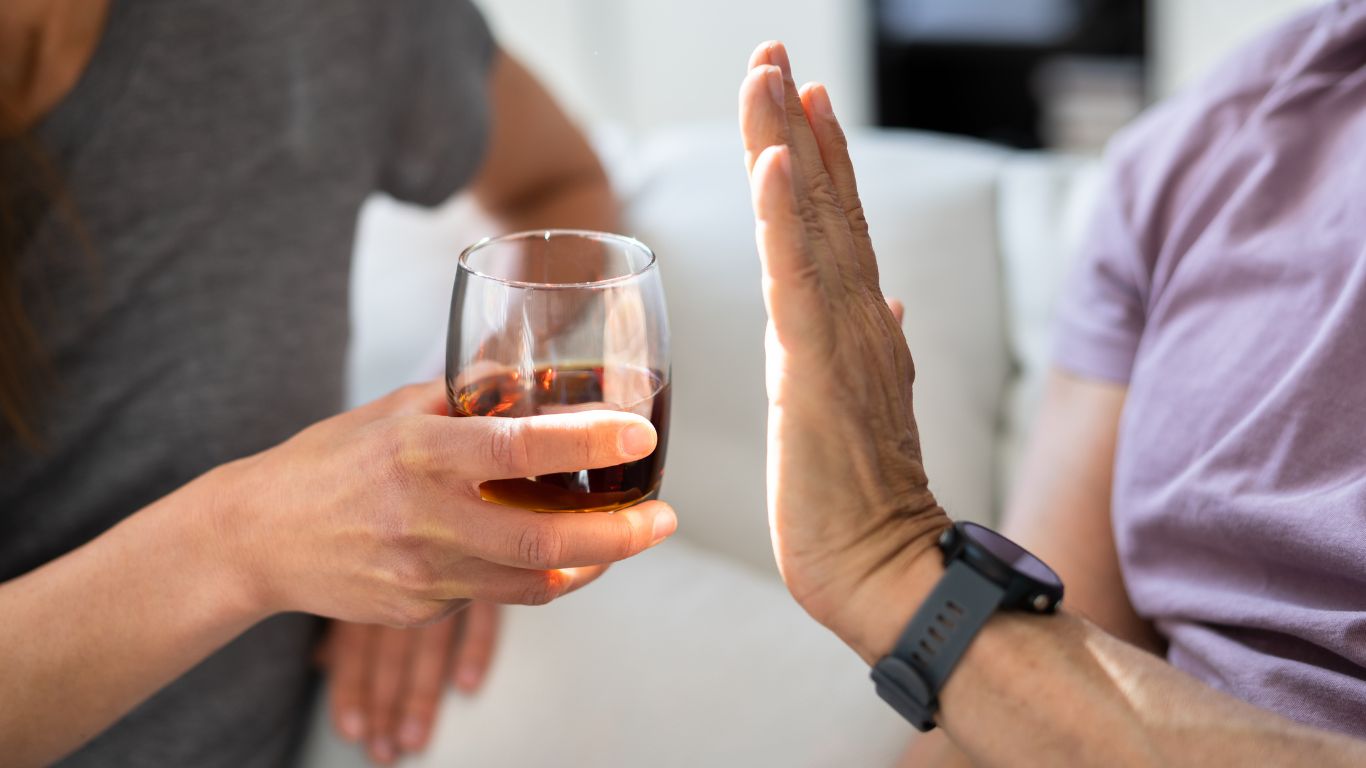
For most of its history the category had one job: make something that resembles a drink you already know, minus the alcohol. Whiskey that burns. Wine that reads as wine. It worked well enough to give people something to hold, and it set the terms of the argument — every bottle was judged against the thing it was standing in for.
That is no longer the only thing on the shelf, and the bottles that have moved past it are the most interesting ones in the category.
The problem with imitation as a goal
A drink built to resemble something else can only ever be measured against it, and it will lose. Whiskey without alcohol has to replace warmth, which is not a flavor. Vodka has to replace almost nothing, because vodka is defined by what it is not. Judged as substitutes, these bottles are always a version of something rather than a thing.
Some of them are very good anyway, particularly where the original was carrying its flavor in something other than the alcohol — which is why gin and beer survive removal best.
The four families that stopped imitating
The alternative to imitation is to build something alcohol-free from the start and let it be judged on its own terms. On our shelf that has settled into four recognizable families, and they are doing genuinely different things.
| What it is built from | What it is for | On our shelf | |
|---|---|---|---|
| Sparkling tea | Blended teas, carbonated. No grapes at any point. | The table. It was invented for food pairing, not for abstainers. | Copenhagen Sparkling Tea, TÖST |
| Wine alternatives that are not wine | Verjus, tea, fruit, salt, kombu. Built rather than dealcoholized. | A savory drink with enough acid and tannin to sit through a meal. | NON (seven expressions) |
| Botanical elixirs | Roots, barks and botanicals extracted and blended. | Sipping. These are finished drinks, not bases to mix. | Three Spirit, Aplos, The Pathfinder |
| Functional cans | Kava, adaptogens or hemp, in a ready-to-drink format. | An effect rather than a flavor. Read the label if that matters to you. | Leilo, Kin Euphorics, Curious Elixirs |
Every producer here is on our shelf. The prices are what they were at the time of writing and render live on each product page.
Of the four, sparkling tea has the clearest claim, because it was not invented for people avoiding alcohol at all.
It is worth knowing where that bottle came from, because the story is the argument. Jacob Kocemba was a sommelier at a Michelin-starred restaurant in Copenhagen with a cellar of more than 1,700 wines, and could not find one that worked with a particular dessert. He blended teas instead. The category exists because wine could not do a job — which is close to the opposite of how imitation products come about.
Jancis Robinson MW jancisrobinson.com
“Spectacularly good” — and, she writes, among the best no- and low-alcohol drinks she has tasted, wines included.
Read it →Sourced second-hand — verify at the original before publishing.That is also why the price does not read as a premium. A substitute has to undercut the thing it stands in for; a drink that is not standing in for anything is priced as itself — which is how a sparkling tea ends up costing the same as a good dealcoholized wine.
None of these is trying to remind you of anything. That is the whole move.
Why it happened now
Partly because the technique caught up. Dealcoholization got good enough that imitation stopped being the hard problem, which freed producers to ask what else the category could be.
And partly because the audience changed. A longitudinal study of more than 23,000 Australians, published in Addiction in 2025, found Generation Z substantially more likely to abstain from alcohol across their lives than Baby Boomers — and it is the first Australian study to separate genuine generational change from the simple fact that people drink less as they age. The data is Australian rather than American, but the direction is the one every market reports. If the original was never the reference point, a drink that stands on its own is not a compromise.
There is still no word for it
Every name the category has is a negation. Non-alcoholic. Alcohol-free. Zero-proof. Mocktail. Each one defines the drink by what has been taken out, which made sense when everything on the shelf was a subtraction.
A sparkling tea is not a mocktail and not wine without the wine, but it gets shelved under a word that says it is missing something. The drinks moved on and the vocabulary did not — which is the last place the imitation era is still hiding, and part of why the labels are so confusing.
What this means when you are choosing
It is now worth asking a question that did not use to arise: do you want the shape of a familiar drink, or do you want a good drink? Both answers are available and they lead to different bottles.
If you want the shape — a glass of red with dinner, a spritz before it — buy the best imitation you can and judge it generously. If you do not, the drinks that were never imitating anything are where the category is doing its most interesting work.
Sources
Common questions
Are all non-alcoholic drinks copies of alcoholic ones?
No, and increasingly not. Early products were built to resemble wine, beer or spirits. Many newer ones are made alcohol-free from the start using teas, botanicals or verjus, and are not standing in for anything.
Is an imitation a worse drink?
Not at all. A good dealcoholized wine is doing something genuinely difficult, and a familiar shape is often exactly what an occasion wants. The change is that it is no longer the only option, not that it became a bad one.
Which drinks survive imitation best?
The ones where the alcohol was not carrying the flavor. Gin is defined by its botanicals and beer by hops and malt, so both survive removal well. Whiskey is hardest, because warmth is not a flavor and cannot simply be replaced.
What should I buy if I do not want an imitation?
Look for sparkling teas, botanical aperitifs and drinks described as never alcoholized. They are not versions of anything, so judge them on whether you like them rather than on what they remind you of.


